The 9 PM Pantry Raid: Why Your Dinner Failed You (And How to Fix It)
It’s 9:00 PM. You ate a “sensible” dinner three hours ago, but now you’re standing in the kitchen, bathed in the refrigerator light, frantically searching for a snack. Your stomach is growling, and your willpower is fading fast. It feels like a failure of discipline, but it’s actually a failure of biology. You didn’t eat too little; you just ate the wrong fuel.
Welcome to the end of the late-night snack attack.
The problem isn’t you; it’s the “Empty Calorie Trap”—meals that look filling but result in a blood sugar crash that leaves you exhausted and starving. The solution is simple, biological science: prioritizing protein density.
In this guide, we are going to revolutionize your evening meal plan. We are moving beyond dry chicken breast and steamed broccoli to explore High-Protein Dinners For Energy that actually taste amazing. Whether you are an exhausted parent looking for high protein dinners for family nights or a busy professional needing high protein dinners for one, we have cracked the code on satiety.
We know that life gets busy, which is why this article covers every possible scenario. We will show you high protein dinners easy enough for a Tuesday night and high protein dinners crockpot style that cook while you’re at work. Are you watching your waistline? We have curated high protein dinners under 500 calories and Comforting Low Carb High Protein Dinner Ideas that don’t taste like “diet food.”
From high protein dinners with ground beef that won’t break the bank, to high protein dinners for two perfect for date night, this is the ultimate resource. We’ve even included high protein dinners for kids (yes, they will actually eat them!) and Quick High Protein One Pot Dinner Recipes to Try for when you just can’t face a sink full of dishes.
Get ready to discover the Laziest Fall High Protein Meals Anyone Can Make, high protein high fibre meals for gut health, and savory high protein dinners with chicken.
Stop snacking and start nourishing. Here is how to make high protein dinners healthy, satisfying, and absolutely delicious.
The Science of Satiety: Why Protein Wins
Have you ever eaten a massive bowl of pasta, felt uncomfortably stuffed, and yet found yourself looking for a snack two hours later? That isn’t a lack of willpower—it’s a biological reaction.
To understand why high-protein dinners keep you full, we have to look at what happens inside your body after you swallow. It comes down to three main factors: the energy cost of digestion, hormone regulation, and blood sugar stability.
1. The Thermic Effect of Food (TEF)
Not all calories are created equal. Your body has to burn energy to digest food, a process known as the Thermic Effect of Food (TEF).
- Fats: Your body burns about 0-3% of the calories in fat just to digest it.
- Carbohydrates: Your body burns about 5-10% of the calories to digest carbs.
- Protein: Your body burns a massive 20-30% of the calories in protein during digestion.
What this means for you: Protein is complex. It takes serious work for your body to break it down. This slow, labor-intensive digestion process means the food stays in your stomach longer, physically keeping you fuller for an extended period compared to a meal rich in simple carbs.
2. Mastering Your Hunger Hormones
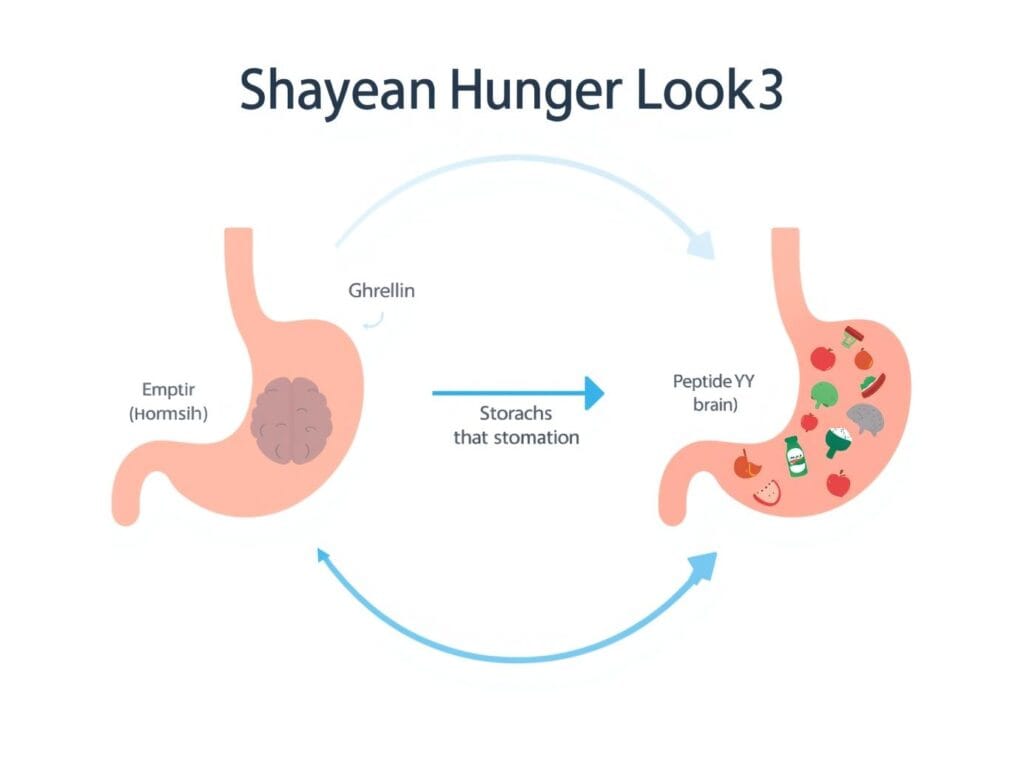
Your appetite is controlled by a complex chemical signaling system. Protein is the master switch for the two most important hormones in this system: Ghrelin and Peptide YY.
- Ghrelin (The “Gremlin”): Think of Ghrelin as the “Hunger Gremlin.” When your stomach is empty, it releases Ghrelin, which travels to your brain and screams, “Eat now!” Studies show that protein is significantly better at suppressing Ghrelin levels than fats or carbohydrates.
- Peptide YY (The “Stop Sign”): This is your satiety hormone. When released, it tells your brain, “I’m done, I’m satisfied.” High-protein meals trigger a robust release of Peptide YY (and another hormone called GLP-1), effectively putting up a stop sign for your appetite.
3. The Blood Sugar Rollercoaster vs. The Highway
When you eat a dinner high in refined carbohydrates (like plain pasta or pizza) without enough protein, your blood sugar spikes rapidly. Your body releases insulin to bring it down, often overcompensating and causing a crash.
- The Crash: That sudden drop in blood sugar is what causes the “9 PM cravings.” Your brain thinks you are out of fuel and demands quick energy (usually sugar).
- The Protein Fix: Protein slows down the absorption of sugar into your bloodstream. By pairing protein with fiber, you turn that blood sugar “rollercoaster” into a steady, flat highway. No spikes, no crashes, no late-night panic eating.
4. The Satiety Trifecta
If you want to build the ultimate “keep me full” dinner, you need to hit the Satiety Trifecta. A high-protein dinner shouldn’t just be a slab of meat; it needs support.
The Formula: Protein (Suppresses Hunger) + Fiber (Adds Volume) + Healthy Fats (Slows Digestion) = Hours of Fullness
This is why a high protein dinner with chicken (Protein) is good, but chicken with avocado (Fat) and broccoli (Fiber) is unbeatable.
II. What Counts as a “High-Protein” Dinner?
Walk down any grocery store aisle, and you’ll see “High Protein” stamped on everything from granola bars to ice cream. But when it comes to a proper dinner that keeps you full, a sprinkle of protein powder isn’t enough. We need to define a specific target to ensure you are triggering those satiety hormones we discussed in the previous section.
The Magic Number: Aim for 30 Grams
While everyone’s daily needs vary based on weight and activity level, nutrition experts generally agree on a “sweet spot” for satisfying meals.
For a dinner to be truly considered “High-Protein” and effective for satiety, you should aim for a minimum of 25 to 30 grams of protein per meal.
Why 30 grams? This isn’t an arbitrary number. Research suggests there is a “Leucine Threshold”—a specific amount of amino acids required to trigger muscle protein synthesis. When you hit this threshold (usually around 30g of high-quality protein):
- Your body switches from catabolic (breaking down) to anabolic (building/repairing).
- The release of satiety hormones (Peptide YY) is maximized.
- You stay fuller for significantly longer than if you had just eaten 10g or 15g.
Quality Matters: Not All Protein is Equal
It’s not just about the grams; it’s about “Bioavailability”—how easily your body can absorb and use that protein.
- Animal Proteins (High Bioavailability): Meat, fish, eggs, and dairy are “complete” proteins. They contain all nine essential amino acids in the right ratios. Your body absorbs these very efficiently.
- Plant Proteins (Variable Bioavailability): Plants are fantastic, but they are often “incomplete” proteins (missing one or more amino acids).
- The Fix: If you are eating plant-based, variety is key. Combining legumes (beans/lentils) with grains (rice/quinoa) creates a complete protein profile similar to meat.
The “No-Scale” Portion Guide
You don’t need to weigh your food every night to get this right. You can use your hand as a surprisingly accurate measuring tool.
Shutterstock
Explore
- The Palm Method: For lean meats (chicken, beef, fish), a serving size roughly the size and thickness of your palm (minus the fingers) provides about 20–25g of protein.
- The Fist Method: For yogurt or cottage cheese, a portion the size of a clenched fist is usually around 1 cup, which can yield 20–25g of protein.
- The Cupped Hand: For beans and legumes, a cupped hand holds about 1/2 cup, providing roughly 7–9g of protein. (You’ll need 3 cupped hands to hit the high-protein target if this is your only source!).
Pro Tip: Most people underestimate protein portions. If you are still hungry an hour after dinner, look at your plate. If your protein source was smaller than a deck of cards, you likely didn’t eat enough to trigger the “fullness” signal.
The Ultimate High-Protein Grocery List
Before we dive into the cooking, we need to stock the kitchen. The secret to consistent high-protein dinners is having the right ingredients on hand. If your fridge is stocked with these staples, you will never be more than 20 minutes away from a satiating meal.
To help you shop efficiently, we have broken this down into Protein Powerhouses (the stars of the show) and Volume Add-ons (the fiber that keeps you full).
1. Protein Powerhouses (The Satiety Drivers)
Use this chart to choose your main protein source. We have categorized them by type and listed their approximate protein count to help you hit that 30g goal.
| Category | Food Item | Protein (approx. per 4oz/100g) | Best For… |
| Lean Poultry | Chicken Breast | 31g | Stir-fries, sheet pan meals, salads |
| Ground Turkey (93%) | 22g | Tacos, egg roll bowls, meatballs | |
| Red Meat | Lean Ground Beef (93/7) | 26g | Burgers, chili, bolognese sauce |
| Sirloin Steak / Flank Steak | 28g | Steak bites, fajitas, skewers | |
| Pork Tenderloin | 26g | Roasting, medallions, medallions | |
| Seafood | Salmon | 22-25g | Baking, pan-searing (rich in Omega-3s) |
| Shrimp | 24g | Quick sautés, pasta, tacos | |
| White Fish (Cod/Tilapia) | 20g | Fish tacos, light curries | |
| Dairy & Eggs | Greek Yogurt (Non-fat) | 10g (per ½ cup) | Creamy sauces, marinades |
| Cottage Cheese | 14g (per ½ cup) | Blending into sauces (Mac & Cheese hack) | |
| Eggs | 6g (per large egg) | Frittatas, fried rice topping | |
| Plant-Based | Lentils (Cooked) | 9g (per ½ cup) | Soups, shepherd’s pie, stews |
| Tofu (Extra Firm) | 10g (per ½ cup) | Crispy cubes, stir-fries | |
| Tempeh | 15g (per ½ cup) | Crumbled “meat” substitute, tacos | |
| Edamame | 9g (per ½ cup) | Salad toppers, snacking |
2. The “Volume” Add-ons (High Fiber)
Protein keeps you satisfied, but Fiber keeps you full. You can eat a massive amount of these vegetables for very few calories. This concept is called “Volume Eating.”
- Leafy Greens: Spinach, Kale, Swiss Chard (Add handfuls to sauces; they shrink down to nothing!).
- Cruciferous Veggies: Broccoli, Cauliflower (great as rice), Brussels Sprouts, Cabbage.
- High-Water Veggies: Zucchini (perfect for noodles/zoodles), Cucumber, Bell Peppers.
3. The Pantry “Secret Weapons”
These shelf-stable items boost flavor and add sneaky protein.
- Chickpea Pasta or Lentil Pasta: Swapping white pasta for these can add 11-13g of protein per serving.
- Quinoa: A complete plant protein that works great as a rice substitute.
- Bone Broth: Use this instead of water to cook your rice or quinoa for an extra 9g of protein per cup.
- Nutritional Yeast: A vegan staple that adds a cheesy flavor and protein boost to popcorn or roasted veggies.
Category 1: Quick & Easy Weeknight Meals (Under 30 Minutes)
We are starting with the “I don’t have time to cook” excuses. High-protein dinners do not need to take hours of braising. This category focuses on speed, high heat, and maximum flavor.
Recipe 1: Garlic Butter Steak Bites with Zucchini Noodles
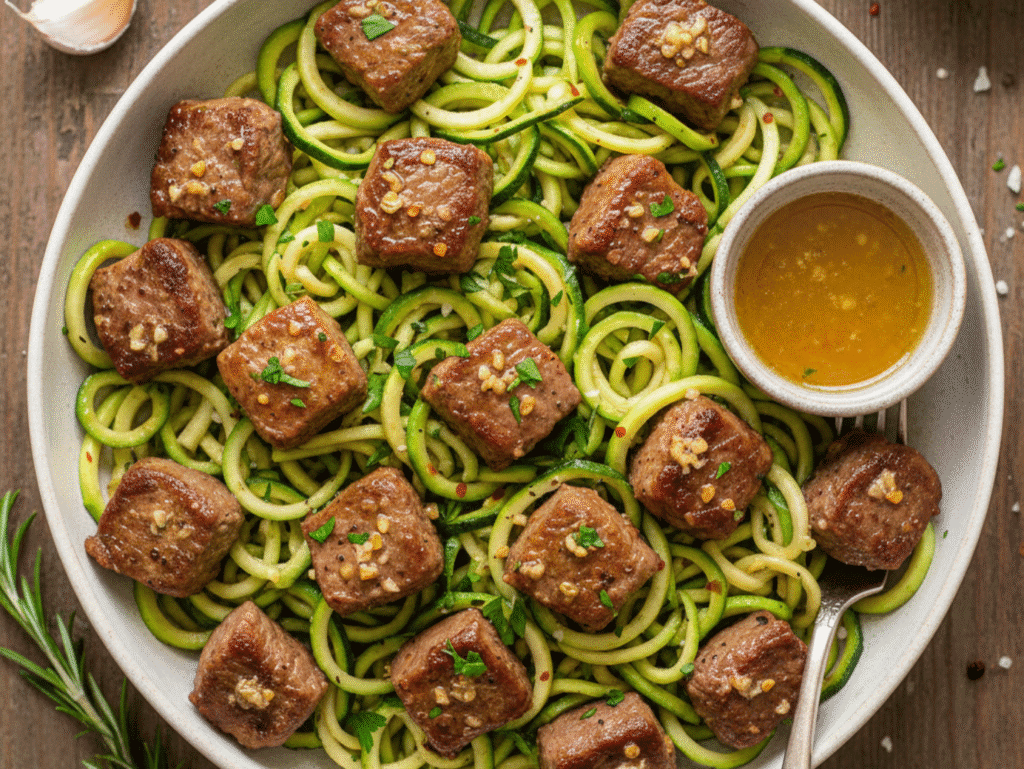
This meal is the definition of “high reward, low effort.” It pairs savory, tender beef with light zucchini noodles (zoodles) to create a meal that feels indulgent like a steakhouse dinner but leaves you feeling light and energized.
Nutritional Benefits
Here is why this meal is a powerhouse for your body:
- Massive Satiety: With over 25g of protein per serving, this meal crushes hunger hormones immediately.
- Blood Sugar Control: Being naturally low-carb, this meal prevents the insulin spike that leads to fat storage.
- Heme Iron: The red meat provides easily absorbable iron, essential for energy levels and preventing fatigue.
- Zinc Boost: Beef is rich in zinc, which supports a healthy immune system and metabolism.
- Healthy Fats: The butter and olive oil assist in the absorption of fat-soluble vitamins (A, D, E, K) found in the zucchini.
- Hydration: Zucchini is over 90% water, helping to hydrate you while adding bulk to the meal.
- Muscle Repair: The high amino acid profile in sirloin is ideal for post-workout recovery.
- Gut Health: Fresh garlic acts as a prebiotic and has natural antimicrobial properties.
Why You’ll Love This Recipe
- Ready in 20 Minutes: From fridge to table in less time than it takes to order delivery.
- One-Pan Wonder: Minimal cleanup means you can relax after dinner instead of scrubbing dishes.
- Keto & Paleo Friendly: Fits perfectly into low-carb and whole-food diets without modifications.
- Restaurant Quality: The “hard sear” on the steak bites mimics a high-end steakhouse experience.
- Budget-Friendly: You can use cheaper cuts of steak (like sirloin or round) because cutting them into bites makes them tender.
- High Volume: You can eat a massive bowl of zucchini noodles for very few calories.
- Customizable: Easy to swap the veggies or the protein based on what is in your fridge.
- Kid-Approved: The garlic butter sauce makes the vegetables taste rich and savory, not “green.”
Ingredients Breakdown
- 1.5 lbs Sirloin Steak: Cut into bite-sized 1-inch cubes. (Ribeye or New York Strip also work).
- 1 tbsp Olive Oil: For searing the meat at high heat.
- 3 Medium Zucchini: Spiralized into noodles (or 1 package of pre-spiralized zoodles).
- 3 tbsp Unsalted Butter: Divided (use high-quality grass-fed butter if possible).
- 4 Cloves Garlic: Minced fresh (avoid the jarred stuff for this recipe!).
- 1 tsp Dried Oregano (or Thyme): For earthy flavor.
- 1 tsp Salt: To taste (plus extra for sweating the zucchini).
- 1 tsp Black Pepper: Freshly cracked.
- 1 tbsp Fresh Parsley: Chopped, for garnish.
- Optional: Red pepper flakes for a kick.
Step-by-Step Recipe Instructions
- Prep the Zoodles: If spiralizing fresh zucchini, place the noodles in a colander and sprinkle with a little salt. Let them sit for 10 minutes to draw out excess moisture, then pat dry with a paper towel. (This prevents a watery sauce!).
- Season the Steak: Pat the steak cubes very dry with a paper towel. Season generously with salt and pepper.
- The Hard Sear: Heat the olive oil in a large skillet (cast iron is best) over high heat. Once the oil is shimmering and hot, add the steak in a single layer. Do not overcrowd the pan (work in batches if needed).
- Cook the Meat: Sear for 2 minutes without moving them to get a golden crust. Flip and cook for another 1-2 minutes until browned but not overcooked. Remove steak from the pan and set aside on a plate.
- Make the Garlic Butter: Reduce heat to medium. Add 2 tbsp of butter to the same pan. Scrape up the browned bits (flavor!) from the bottom. Add the minced garlic and oregano, cooking for 1 minute until fragrant.
- Cook the Zoodles: Add the zucchini noodles to the pan. Toss them in the garlic butter for just 2-3 minutes. Do not overcook—you want them slightly crisp, not mushy.
- Combine: Add the steak (and any juices on the plate) back into the pan. Add the remaining 1 tbsp of butter. Toss everything together for 30 seconds to warm through and coat the meat.
- Serve: Remove from heat immediately. Garnish with fresh parsley and serve hot.
Serving Suggestions
- The “Clean” Eater: Serve with a squeeze of fresh lemon juice to cut the richness.
- The Carb Lover: Serve with a side of roasted sweet potato wedges or over a small portion of jasmine rice.
- The Fancy Dinner: Pair with a side of blistered cherry tomatoes or roasted asparagus spears.
Nutritional Info (Per Serving)
Based on 4 Servings
| Nutrient | Amount |
| Calories | ~380 kcal |
| Total Fat | 24g |
| Protein | 32g |
| Total Carbs | 8g |
| Fiber | 3g |
| Net Carbs | 5g |
Storage & Meal Prep Tips
- Storage: Store leftovers in an airtight container in the refrigerator for up to 3 days.
- Reheating: Reheat gently in a skillet over low heat. Do not microwave on high, or the steak will become rubbery and the zucchini will release too much water.
- Meal Prep: You can cut the steak and spiralize the zucchini up to 2 days in advance. Store them in separate containers until you are ready to cook.
- Freezing: Not recommended. Zucchini noodles turn to mush when thawed.
Common Questions (FAQ)
- My zucchini noodles got soggy, what happened? You likely cooked them too long or didn’t pat them dry. They only need 2-3 minutes of heat!
- Can I use frozen zucchini noodles? Yes, but thaw them completely and squeeze out all the water before adding them to the pan.
- What is the best cut of steak for this? Sirloin is the best balance of price and tenderness. Filet Mignon is most tender but expensive; Stew meat is too tough—avoid it.
- Can I use chicken instead? Absolutely. Use chicken breast or thighs, but ensure you cook them fully (about 5-6 minutes per side) as you cannot eat chicken medium-rare.
- Is this dairy-free? To make it dairy-free, swap the butter for Ghee (clarified butter) or more olive oil.
- Can I use pre-minced garlic? Fresh is much better here because it is a primary flavor, but jarred works in a pinch.
- How do I clean the cast iron skillet after this? Use hot water and a stiff brush (no soap), then dry immediately and rub with a little oil.
- Can I add cheese? Yes! Parmesan cheese sprinkled on top is delicious.
Special Equipment
To prepare this recipe efficiently, you will need:
- Cast Iron Skillet: For the best sear on the meat.
- Spiralizer: To turn the zucchini into noodles (handheld or countertop version).
- Tongs: For flipping steak bites and tossing noodles.
- Chef’s Knife: For cubing the steak evenly.
Recipe Variations
- Surf & Turf: Add shrimp during the last 2 minutes of the steak cooking time.
- Spicy Kick: Add 1 tsp of Cajun seasoning or Sriracha to the butter sauce.
- Mushroom & Swiss: Sauté sliced mushrooms with the garlic and top with Swiss cheese.
- Asian Style: Swap oregano/parsley for soy sauce, ginger, and sesame seeds.
- Creamy Version: Stir in 2 tbsp of heavy cream or cream cheese at the end.
- Fajita Style: Add sliced bell peppers and onions when you sear the steak.
- Budget Swap: Use ground beef instead of steak bites (brown it first).
- Veggie Swap: Use asparagus or green beans instead of zucchini noodles.
- Herb Lover: Add fresh rosemary and thyme for a French bistro vibe.
- Lemon Caper: Add 1 tbsp capers and lemon juice for a “Piccata” style steak.
This Garlic Butter Steak Bites recipe proves that eating high-protein meals doesn’t mean eating boring, dry food. It is fast, flavorful, and keeps you full for hours.
Try this recipe tonight! If you make it, snap a photo and tag us—we’d love to see your sear!
Category 2: Budget-Friendly Protein Bombs
Eating healthy is often stigmatized as “expensive,” but some of the highest protein foods are actually the cheapest. This category focuses on “stretching” your dollar.
Recipe 2: The “Budget Stretcher” Lentil & Beef Shepherd’s Pie
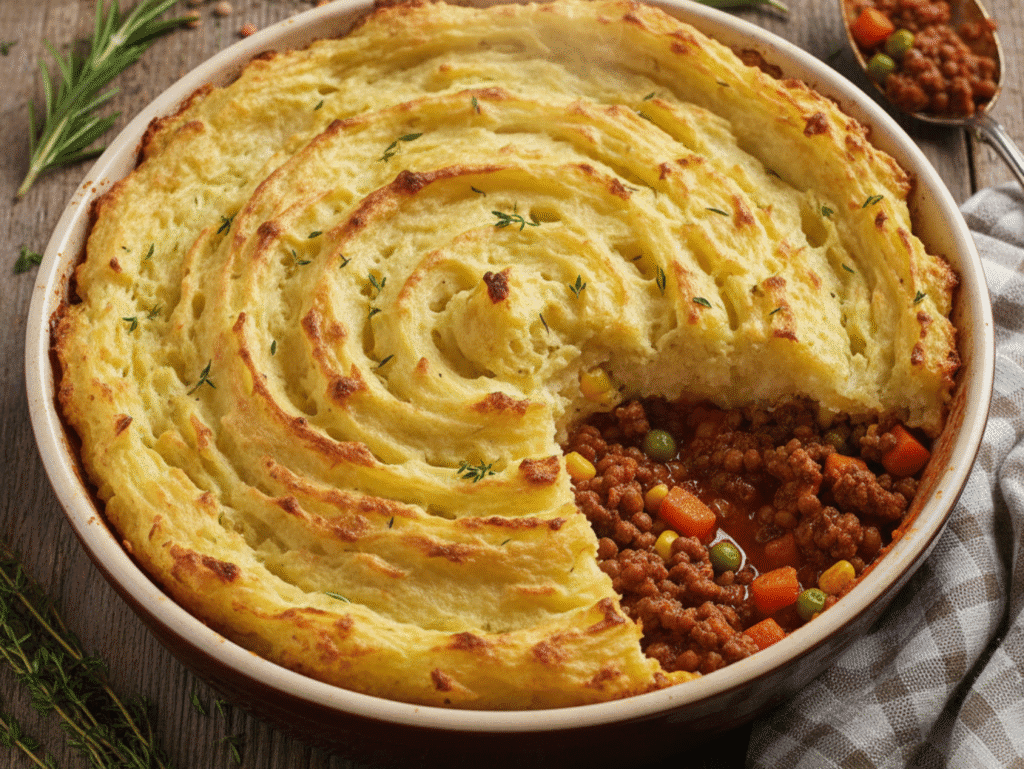
If you are looking for high protein dinners with ground beef that feed the whole family for pennies, this is it. By cutting the meat with lentils, you get a massive boost of fiber and stay fuller for longer, all while making your expensive ground beef last twice as long.
Nutritional Benefits
Why this budget meal is nutritionally superior to the traditional version:
- Dual Protein Sources: You get the complete amino acids from the beef combined with the plant-based protein of lentils, totaling over 30g per serving.
- Massive Fiber Boost: Traditional Shepherd’s Pie has almost no fiber. This version packs 8-10g of fiber, essential for the “Satiety Trifecta.”
- Complex Carbs: The potato topping provides steady energy, while the lentils lower the overall glycemic index of the meal.
- Iron Rich: Both beef and lentils are fantastic sources of iron, crucial for energy and focus.
- Folate: Lentils are rich in B-vitamins, specifically folate, which supports cell function.
- Potassium: The potatoes and tomato paste offer a high dose of potassium for heart health.
- Low Processed Sugar: Unlike store-bought versions, this savory sauce is sugar-free.
- Reduced Saturated Fat: By using half lentils, you significantly reduce the saturated fat content compared to an all-beef pie.
Why You’ll Love This Recipe
- Saves Money: You only need half a pound of meat to feed a family of 4-6.
- Meal Prep Champion: This tastes even better the next day after the flavors meld.
- Freezer Friendly: You can assemble it, freeze it, and bake it weeks later for an instant dinner.
- Hidden Veggies: The lentils blend in so well with the ground beef that picky eaters (and kids) often can’t tell the difference.
- Ultimate Comfort: It’s warm, savory, and filling—perfect for fall and winter.
- One-Dish Meal: No need for side dishes; it has your protein, carbs, and veggies all in one bowl.
- Scalable: easily doubled to feed a crowd or for large batch cooking.
Ingredients Breakdown
The Filling:
- 0.5 lb Lean Ground Beef (93/7): (You can also use ground turkey).
- 1 cup Dry Brown or Green Lentils: Rinsed (Do not use red lentils, they turn to mush).
- 2.5 cups Beef Broth: To cook the lentils and create the gravy.
- 1 Onion: Diced.
- 2 Carrots: Pealed and diced.
- 1 cup Frozen Peas: No need to thaw.
- 2 tbsp Tomato Paste: For depth of flavor (Umami).
- 1 tbsp Worcestershire Sauce: The secret ingredient for “meaty” flavor.
- 1 tsp Thyme & Rosemary: Dried herbs.
The Mash:
- 3 large Russet Potatoes: Peeled and chopped into chunks.
- 1/4 cup Milk: (Dairy or Almond).
- 2 tbsp Butter: For creaminess.
- Salt & Pepper: To taste.
Step-by-Step Recipe Instructions
- Boil the Potatoes: Place peeled potato chunks in a large pot of salted water. Bring to a boil and cook for 15-20 minutes until fork-tender.
- Start the Filling: While potatoes boil, heat a large skillet over medium-high heat. Add the ground beef, onion, and carrots. Cook until beef is browned and onions are soft (about 5-7 mins). Drain excess fat if necessary.
- Add Lentils & Liquid: Add the dry lentils, tomato paste, herbs, Worcestershire sauce, and beef broth to the skillet. Stir to combine.
- Simmer: Bring to a boil, then reduce heat to low. Cover and simmer for 20-25 minutes, or until lentils are tender and most of the liquid is absorbed. (If it gets too dry before lentils are done, add a splash of water).
- Finish Filling: Stir in the frozen peas (they will cook instantly in the residual heat). Taste and add salt/pepper.
- Mash the Potatoes: Drain the cooked potatoes. Return them to the hot pot to dry out for a minute. Add butter and milk. Mash until smooth and creamy.
- Assemble: Preheat oven to 400°F (200°C). Transfer the meat/lentil mixture into a 9×9 baking dish (or keep it in the skillet if it is oven-safe). Spread the mashed potatoes evenly over the top.
- Bake: Bake for 20 minutes until the filling is bubbling.
- Broil (Optional): Turn on the broiler for the last 2-3 minutes to get the potato peaks golden brown and crispy.
- Rest: Let it sit for 10 minutes before serving (this helps the filling set so it doesn’t fall apart).
Serving Suggestions
- The Classic: Serve with a side of steamed green beans or roasted broccoli for extra volume.
- The Fresh Contrast: A simple green salad with vinaigrette cuts through the richness of the potato.
- The Dip: Some families love serving this with a side of ketchup or HP sauce.
Nutritional Info (Per Serving)
Based on 6 Servings
| Nutrient | Amount |
| Calories | ~340 kcal |
| Total Fat | 9g |
| Protein | 22g |
| Total Carbs | 44g |
| Fiber | 11g |
| Net Carbs | 33g |
Storage & Meal Prep Tips
- Fridge: Lasts 4-5 days in an airtight container.
- Freezer (Baked): Can be frozen in individual portions for up to 3 months. Microwave to reheat.
- Freezer (Unbaked): Assemble the whole pie, cover tightly with foil, and freeze. Bake from frozen (add 20-30 mins to cooking time) or thaw in fridge overnight before baking.
- Reheating: Microwave is fine, but reheating in the oven (350°F for 15 mins) keeps the potato topping crispy.
Common Questions (FAQ)
- Do I need to soak the lentils first? No! Brown and green lentils cook in about 20-25 minutes, which is perfect for simmering with the beef.
- Can I use canned lentils? Yes. If using canned, drain and rinse them. Only simmer the mixture for 5-10 minutes since they are already cooked. Reduce broth to 1/2 cup.
- Can I use sweet potatoes? Absolutely. Sweet potatoes add more Vitamin A and a lower glycemic index.
- Is this gluten-free? Yes, as long as your Worcestershire sauce is gluten-free (some brands contain barley).
- Can I make it vegetarian? Swap the beef for another cup of lentils or mushrooms, and use vegetable broth instead of beef broth.
- My filling is too runny, what do I do? Let it simmer uncovered for a few more minutes to evaporate the liquid, or stir in a teaspoon of cornstarch mixed with water.
- Can I use instant mashed potatoes? In a rush? Yes. But fresh potatoes have better texture and nutrients.
- What if I hate peas? Swap them for corn, green beans, or just leave them out.
Special Equipment
- Potato Masher: Or a ricer for ultra-fluffy potatoes.
- Large Skillet/Sauté Pan: Ideally one with a lid for simmering the lentils.
- 9×9 Baking Dish: Or a 2-quart casserole dish.
- Peeler: For the carrots and potatoes.
11. Recipe Variations
- Cheesy Top: Sprinkle sharp cheddar cheese over the potatoes before baking.
- Cauliflower Mash: Use mashed cauliflower instead of potatoes for a low-carb, keto version.
- Turkey Shepherd’s Pie: Use ground turkey for a leaner profile.
- Curried Version: Add curry powder and turmeric to the filling for an Indian twist.
- Loaded Potato: Mix bacon bits and chives into the mashed potato topping.
- Mushroom Lovers: Replace half the meat with finely chopped mushrooms for extra Umami.
- Spicy Tex-Mex: Use black beans instead of lentils, add taco seasoning, and top with pepper jack cheese.
- Root Veggie Mash: Mix parsnips or turnips into the potato mash for a complex flavor.
- Garlic & Herb: Add roasted garlic to the mashed potatoes.
- Mini Pies: Bake in a muffin tin for individual “grab-and-go” portions (great for kids!).
This Lentil & Beef Shepherd’s Pie proves that you don’t need a big budget to hit your protein goals. It is one of the most comforting, filling high protein high fibre meals you can make.
Give your wallet a break and your muscles a boost! Save this recipe for your next Sunday meal prep.
Category 3: Plant-Based High-Protein Dinners (Vegetarian/Vegan)
One of the biggest questions we get is, “How do I get 30g of protein without eating chicken?” The answer lies in Soy and Nuts.
Soy is one of the few plant sources that is a “complete protein,” meaning it has all the amino acids your muscles need.
Recipe 3: Crispy Peanut Tofu with Quinoa
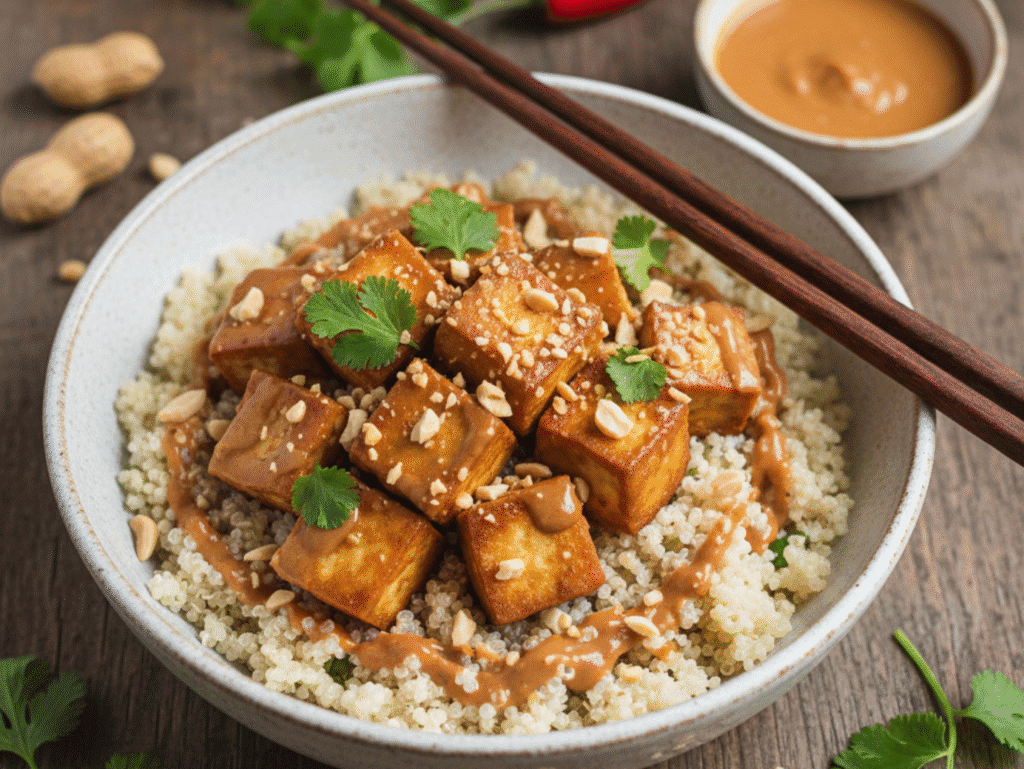
This isn’t your average soggy tofu. We are using a cornstarch coating technique to get it shatteringly crisp without deep frying, then drenching it in a savory, high-protein peanut sauce. This is one of the best high protein dinners for two because it is easy to scale down, or high protein dinners for one because the leftovers make an incredible lunch.
Nutritional Benefits
Here is why this plant-based meal rivals any steak dinner:
- Complete Protein Profile: Tofu is a complete protein, and when paired with quinoa (also a complete protein) and peanut butter, you get a massive amino acid boost.
- Heart Health: Unlike red meat, the fats here are monounsaturated (from peanuts) and polyunsaturated (from soy), which support healthy cholesterol levels.
- Bone Health: Tofu is often calcium-set, making it excellent for bone density.
- High Fiber: Quinoa and vegetables provide insoluble fiber to aid digestion and keep you full.
- Magnesium Rich: Quinoa is packed with magnesium, which helps with muscle relaxation and sleep quality.
- Antioxidant Boost: The ginger and garlic in the sauce are powerful anti-inflammatories.
- Blood Sugar Stable: The combination of fiber and plant protein results in a very slow, steady glucose release.
Why You’ll Love This Recipe
- Better Than Takeout: It tastes like your favorite Thai peanut chicken but is much healthier and cheaper.
- Texture Heaven: The tofu is crispy on the outside and soft on the inside—no “spongy” texture here.
- Sauce is King: The peanut sauce is so good you will want to put it on everything.
- Fast Cooking: Once the tofu is prepped, the actual cooking time is under 15 minutes.
- Vegan & Gluten-Free: Fits almost every dietary requirement (use Tamari instead of Soy Sauce for GF).
- No “Food Coma”: You feel energized after eating this, not heavy or lethargic.
- Meal Prep Friendly: The tofu stays surprisingly firm even when reheated.
Ingredients Breakdown
The Protein Base:
- 1 Block (14oz) Extra Firm Tofu: (Do not use Silken or Soft tofu).
- 2 tbsp Cornstarch: The secret ingredient for crispiness.
- 1 tbsp Oil: Avocado or Vegetable oil for pan-frying.
- Salt & Garlic Powder: To season the coating.
The “Gold” Peanut Sauce:
- 1/3 cup Natural Peanut Butter: Creamy, no added sugar.
- 2 tbsp Soy Sauce (or Tamari): For saltiness.
- 1 tbsp Maple Syrup: For balance.
- 1 tsp Sesame Oil: For aroma.
- 1 tbsp Rice Vinegar: For acid/tang.
- 1 tsp Fresh Ginger: Grated.
- 2-3 tbsp Warm Water: To thin the sauce to your liking.
The Base:
- 1 cup Quinoa: Cooked (creates 3 cups fluffy quinoa).
- Steamed Broccoli: Or any green veggie of choice.
Step-by-Step Recipe Instructions
- Press the Tofu: This is crucial. Wrap the tofu block in paper towels and place a heavy plate (or cast iron skillet) on top for 15-20 minutes to squeeze out the water.
- Cube and Coat: Cut the pressed tofu into 1-inch cubes. Place them in a bowl. Sprinkle with cornstarch, garlic powder, and a pinch of salt. Toss gently until every cube is coated in a thin white dust.
- Crisp the Tofu: Heat oil in a large non-stick skillet over medium-high heat. Add tofu cubes in a single layer. Cook for 3-4 minutes per side until golden brown and crispy on all sides. Remove from pan and set aside.
- Make the Sauce: While tofu cooks, whisk together the peanut butter, soy sauce, maple syrup, sesame oil, rice vinegar, and ginger in a small bowl. Add warm water one tablespoon at a time until it reaches a drizzle-able consistency.
- Combine: Turn the heat off the skillet. Add the crispy tofu back in. Pour half the sauce over the tofu and toss quickly just to coat (don’t let it sit too long or it loses crispiness).
- Assemble: Scoop a base of fluffy quinoa into bowls. Add steamed broccoli. Top with the sticky peanut tofu.
- Garnish: Drizzle the remaining sauce over the veggies. Top with crushed peanuts, green onions, or sesame seeds.
Serving Suggestions
- The Bowl: Serve as described above for a complete meal.
- The Salad: Skip the quinoa and serve the hot tofu over a cold crunchy cabbage salad (slaw style).
- The Wrap: Stuff the crispy tofu and veggies into a whole wheat tortilla for a high-protein lunch on the go.
Nutritional Info (Per Serving)
Based on 3 Servings
| Nutrient | Amount |
| Calories | ~440 kcal |
| Total Fat | 22g |
| Protein | 24g |
| Total Carbs | 38g |
| Fiber | 7g |
| Net Carbs | 31g |
Storage & Meal Prep Tips
- Storage: Store the tofu, quinoa, and sauce in separate containers if possible. The tofu will lose its crispiness if stored in the sauce.
- Reheating: Reheat tofu in an air fryer (375°F for 3-4 mins) to re-crisp it. Microwave works, but the texture will be softer.
- Freezing: Not recommended. Tofu texture changes significantly when frozen (it becomes very sponge-like and chewy).
Common Questions (FAQ)
- Do I really have to press the tofu? Yes! If you don’t, the water inside will steam the tofu instead of frying it, and it will be mushy.
- Can I bake it instead of frying? Yes. Spread coated cubes on a baking sheet and bake at 400°F (200°C) for 25 minutes, flipping halfway.
- I have a peanut allergy, what can I use? Almond butter or Cashew butter works great. For a nut-free option, use Sunbutter (Sunflower seed butter) or Tahini.
- Is Quinoa necessary? No, you can use brown rice, farro, or even cauliflower rice for a lower carb option.
- How do I make this spicy? Add 1 tablespoon of Sriracha or Chili Garlic Sauce to the peanut mixture.
- Can I use tempeh instead? Yes! Tempeh is even higher in protein. Steam the tempeh cubes for 5 minutes before frying to remove bitterness.
- Is this dish complete protein? Yes. Soy (tofu) is complete, and Quinoa is complete. You are covered!
- Can I use chicken with this sauce? Absolutely. This peanut sauce is delicious on grilled chicken breast or shrimp.
Special Equipment
- Non-Stick Skillet: Essential for frying tofu so the cornstarch coating doesn’t stick to the pan.
- Tofu Press: (Optional) You can use heavy books or pans, but a dedicated press is easier.
- Whisk: To get the peanut butter sauce smooth and creamy.
11. Recipe Variations
- Pad Thai Style: Serve over rice noodles with bean sprouts and lime wedges.
- Curry Peanut: Add 1 tsp red curry paste and a splash of coconut milk to the sauce.
- Low Carb: Skip the cornstarch (pan sear plain) and serve over zucchini noodles.
- Veggie Overload: Stir fry bell peppers, snap peas, and carrots with the tofu.
- Sesame Ginger: Skip the peanut butter and make a soy-ginger glaze instead.
- Nut-Free Tahini: Use tahini paste for a more Middle-Eastern fusion flavor.
- Edamame Boost: Add shelled edamame to the quinoa for an extra 5g of protein.
- Cold Noodle Salad: Serve the tofu cold over chilled soba noodles.
- Air Fryer Version: Air fry the tofu cubes at 400°F for 10-12 minutes.
- Honey Garlic: Swap maple syrup for honey and omit peanut butter for a sticky sweet glaze.
This Crispy Peanut Tofu proves that plant-based eating isn’t just “rabbit food.” It is hearty, savory, and incredibly satisfying.
Think you can’t get full on plants? Try this tonight and let us know!
VIII. Category 4: Comfort Food Makeovers (High Protein Editions)
Comfort food usually means “high carb, high fat, low protein.” It’s the perfect recipe for a nap, not energy. But with one secret ingredient, we can transform the ultimate comfort dish—Macaroni and Cheese—into a muscle-building dinner.
Recipe 4: The “Secret Sauce” High-Protein Mac & Cheese
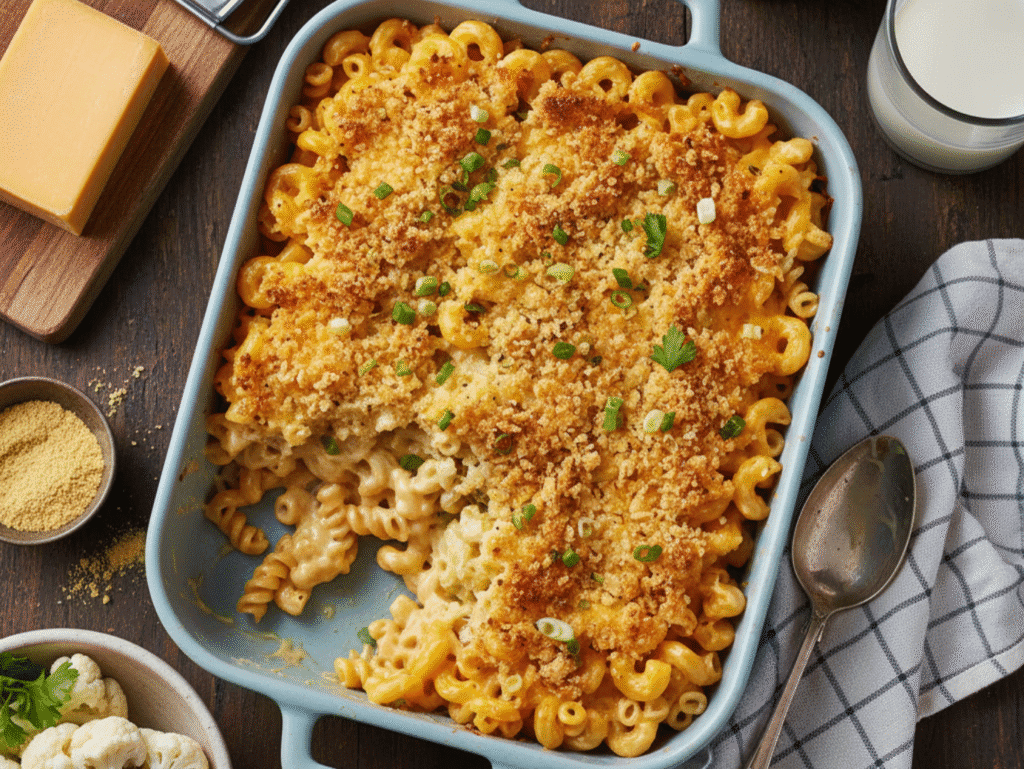
Forget the blue box powder. This recipe uses blended cottage cheese to create a sauce that is richer and creamier than heavy cream, but packed with slow-digesting casein protein. It is one of the best high protein dinners for kids (they will never know) and a top tier Comforting Low Carb High Protein Dinner Idea if you use cauliflower instead of pasta.
Nutritional Benefits
Why this makeover wins:
- Double Protein Hit: By using protein pasta (like chickpea or lentil) and a cottage cheese base, you easily hit 35-40g of protein per bowl.
- Slow-Digesting Casein: Cottage cheese is rich in casein protein, which digests slowly, releasing amino acids into your bloodstream for hours (perfect for staying full all night).
- Gut-Friendly Fiber: Legume-based pastas often have 2-3x the fiber of white pasta.
- Calcium Rich: A massive dose of calcium for strong bones.
- Lower Saturated Fat: We get the creaminess from protein structure, not just milk fat, significantly lowering the calorie density compared to traditional roux-based sauces.
- B-Vitamin Complex: Nutritional yeast (if added) or the cheese provides B12 for energy.
- No “Sugar Crash”: The balance of protein and fats prevents the post-pasta lethargy.
Why You’ll Love This Recipe
- Stealth Health: If you blend the cottage cheese, the texture becomes silky smooth. No one will guess it’s “healthy.”
- Ready in 15 Minutes: Faster than baking a casserole. It’s a stovetop wonder.
- Incredibly Creamy: It clings to the pasta better than watery milk sauces.
- Customizable: Acts as a blank canvas for add-ins like broccoli, peas, or bacon.
- Viral “Hack”: You get to try the cooking method that has taken the fitness world by storm.
- Satisfaction: It scratches that “cheesy, gooey” itch without the guilt.
- Leftovers Reheat Well: Unlike oil-based sauces that separate, this stays relatively creamy.
Ingredients Breakdown
The Base:
- 8 oz High-Protein Pasta: (Brands like Banza (chickpea), Barilla Protein+, or Red Lentil Pasta).
- Optional Volume: 2 cups broccoli florets (boil them with the pasta!).
The Protein Cheese Sauce:
- 1 cup Low-Fat Cottage Cheese (2%): The star ingredient.
- 1/2 cup Milk: (Dairy or unsweetened Almond/Soy).
- 1 cup Sharp Cheddar Cheese: Grated (freshly grated melts best).
- 2 tbsp Parmesan Cheese: For that salty, umami kick.
- 1 tbsp Cornstarch: To stabilize and thicken the sauce.
- 1/2 tsp Garlic Powder & Onion Powder.
- 1/2 tsp Paprika: For color.
- Salt & Pepper: To taste.
- Optional: 1 tsp Dijon mustard (enhances cheese flavor).
Step-by-Step Recipe Instructions
- Boil the Pasta: Bring a large pot of salted water to a boil. Add the protein pasta. Cook according to package directions (usually 7-9 minutes).
- Pro Tip: If adding broccoli, throw it into the pasta water during the last 3 minutes of cooking.
- Blend the Sauce: While pasta cooks, add the cottage cheese, milk, cornstarch, spices, mustard, and Parmesan into a blender. Blend on high until completely smooth and silky. (Do not skip this! Unblended cottage cheese will be grainy).
- Simmer the Sauce: Pour the blended mixture into a large skillet or saucepan over medium-low heat. Whisk constantly. As it heats up, the cornstarch will activate, and the sauce will thicken (about 2-3 minutes).
- Melt the Cheddar: Once the white sauce is thick and bubbling gently, remove from heat (or turn to lowest setting). Stir in the grated cheddar cheese. Stir until melted and glossy.
- Combine: Drain the pasta (reserve 1/4 cup of pasta water just in case). Add the hot pasta to the cheese sauce. Toss to coat. If the sauce is too thick, splash in a little pasta water.
- Season: Taste test. Add more salt or pepper if needed.
- Serve: Serve immediately while gooey and warm.
Serving Suggestions
- The “Mac Daddy”: Top with 4oz of grilled diced chicken breast for a massive 60g protein meal.
- The Crunch: Sprinkle with Panko breadcrumbs and broil for 1 minute.
- The Spicy: Drizzle with Buffalo sauce and top with green onions.
Nutritional Info (Per Serving)
Based on 4 Servings
| Nutrient | Amount |
| Calories | ~380 kcal |
| Total Fat | 12g |
| Protein | 32g |
| Total Carbs | 42g |
| Fiber | 8g |
| Net Carbs | 34g |
Storage & Meal Prep Tips
- Storage: Keep in the fridge for 3-4 days.
- Reheating: Pasta absorbs moisture. When reheating in the microwave, add a splash of milk or water and stir halfway through to make it creamy again.
- Freezing: Not recommended. Dairy-based sauces tend to separate and become grainy when frozen and thawed.
- Prep Ahead: You can blend the sauce base (cottage cheese/milk/spices) days in advance and keep it in a jar until ready to cook.
Common Questions (FAQ)
- Does it taste sour like cottage cheese? No. Once blended and mixed with sharp cheddar and garlic, the “tang” of the cottage cheese mimics the tang of a sharp cheddar. You cannot taste the curds.
- Can I use Greek Yogurt instead? You can, but Greek yogurt has a much stronger “sour” flavor that is harder to mask than cottage cheese. Cottage cheese melts better.
- Why is my sauce grainy? You either didn’t blend the cottage cheese enough, or you overheated the sauce after adding the cheddar (cheese separates at high heat).
- Can I use regular pasta? Yes, but your protein count will drop by about 7-10g per serving.
- Is this gluten-free? If you use Chickpea/Rice pasta and ensure your cornstarch is GF, then yes!
- Can I bake this? Yes. Transfer to a baking dish, top with more cheese/breadcrumbs, and bake at 350°F for 15 mins.
- What if I don’t have a blender? You can use an immersion blender (stick blender). If you don’t have that, you can try whisking vigorously, but the texture will remain slightly chunky.
- Can I use fat-free cheese? Fat-free cheese doesn’t melt well. We recommend standard cheddar or 2% for the best texture.
Special Equipment
- Blender or Food Processor: Essential for eliminating the cottage cheese texture.
- Whisk: For smoothing out the sauce in the pan.
- Cheese Grater: Block cheese melts smoother than pre-shredded (which has anti-caking agents).
Recipe Variations
- Buffalo Chicken Mac: Stir in 1/4 cup buffalo sauce and cooked chicken. Blue cheese crumbles on top.
- Tuna Casserole 2.0: Stir in 2 cans of drained tuna and frozen peas.
- Spinach & Artichoke: Add chopped spinach and canned artichoke hearts.
- Chili Mac: Mix in 1/2 cup of lean ground beef or turkey chili.
- Truffle Mac: Add a drizzle of truffle oil and mushrooms.
- Jalapeno Popper: Add diced pickled jalapenos and crispy bacon bits.
- Pumpkin Mac (Fall Special): Swap 1/2 cup of cottage cheese for pumpkin puree for a festive orange color and vitamin A boost.
- Cajun Style: Add Andouille sausage slices and Cajun seasoning.
- Lobster Mac (Fancy): Add chopped cooked shrimp or lobster meat.
- Broccoli Cheddar: Double the broccoli ratio for a high-volume, lower-calorie meal.
This High-Protein Mac and Cheese proves you don’t have to give up your childhood favorites to reach your adult health goals. It’s creamy, cheesy, and packed with the nutrition you need.
Go grab a tub of cottage cheese and start blending!
How to “Protein-Hack” Your Existing Favorites
You don’t always need a new recipe. Sometimes, you just need to tweak the meals you already love. Use these strategies to take a standard 10g protein dinner and turn it into a 30g high protein dinner healthy powerhouse.
1. The “Sneaky Swaps” Table
Use this cheat sheet to instantly upgrade the protein content of common ingredients.
| If the recipe calls for… | Swap it with… | Protein Gain |
| Sour Cream (1/4 cup) | Greek Yogurt (Plain) | +5g |
| Water (for grains/soup) | Bone Broth | +9g (per cup) |
| White Rice | Quinoa or RightRice | +4-6g |
| Breadcrumbs | Crushed Pork Rinds or Almond Flour | +6-10g |
| Cream Cheese | Blended Cottage Cheese | +10g |
| Tortilla Chips | Quest Chips or Baked Tofu Skins | +15g |
2. The “Topper” Technique
Finish your plate with these nutrient-dense sprinkles.
- Hemp Hearts: 3 tablespoons adds 10g of plant protein (great on salads or soups).
- Nutritional Yeast: 2 tablespoons adds 8g of protein and a cheesy flavor (great on popcorn or roasted veggies).
- Pumpkin Seeds (Pepitas): A handful adds crunch and 9g of protein.
3. The “Double Meat” Rule
Most recipes (especially casseroles and stir-fries) are designed to be cheap, not filling.
- The Hack: If a recipe calls for 1 lb of chicken for 4 people, use 1.5 or 2 lbs. Reduce the pasta/rice portion by 25% to keep the calories roughly the same, but drastically shift the macros toward protein.
X. Meal Prep Strategies for Success
Consistency is the enemy of hunger. If you have protein ready, you won’t order pizza.
1. The “Buffet Style” Prep
Don’t prep full meals (which get soggy). Prep components.
- Tray of Protein: Roast 2lbs of chicken breasts or bake 4 salmon fillets on Sunday.
- Tray of Carbs: Cook a big pot of quinoa or sweet potato cubes.
- Tray of Veggies: Wash and chop lettuce, peppers, and broccoli.
- The Win: Every night, you just mix and match. Tacos on Tuesday, Bowl on Wednesday, Salad on Thursday.
2. Batch Cooking Hard-Boiled Eggs
Keep a bowl of hard-boiled eggs in the fridge. Adding two eggs to any salad or side dish instantly adds 12g of protein.
3. The Freezer “Emergency Chute”
Always keep one bag of Frozen Shrimp and one bag of Edamame in the freezer.
- Why? Shrimp thaws in cold water in 15 minutes and cooks in 3. It is the fastest protein source on earth. Edamame can be microwaved in 2 minutes for a high-protein side.
General Frequently Asked Questions (FAQ)
These are the most common questions regarding a high-protein lifestyle.
1. Can you eat too much protein at dinner?
Myth: “Your body can only absorb 20g at a time.”
Truth: Your body will absorb almost all the protein you eat; it just takes longer to digest larger amounts. Eating 40g or 50g at dinner is perfectly fine and will actually keep you fuller throughout the night.
2. Is it bad to eat protein right before bed?
No, in fact, it can be beneficial. Eating a slow-digesting protein (like Casein found in cottage cheese or Greek yogurt) 30 minutes before sleep can improve muscle protein synthesis overnight and stabilize blood sugar, leading to better sleep quality.
3. Will high protein dinners make me bulky?
No. Getting “bulky” requires massive calorie surpluses and intense heavy lifting over years. Eating high protein dinners for family meals will simply help you maintain lean muscle mass, which boosts your metabolism.
4. How do I get fiber if I eat so much meat?
This is why the “Volume Add-ons” (Section IV) are crucial. High protein should not mean “carnivore.” Always pair your protein with a cruciferous vegetable (broccoli, Brussels sprouts) or legumes.
5. Can kids eat high protein dinners?
Absolutely. Children need protein for growth. However, they have smaller stomachs, so they may not need the full “30g” threshold. The Mac & Cheese or Shepherd’s Pie recipes are perfect ways to ensure they get enough nutrition without forcing them to eat plain steak.
Conclusion
You have officially graduated from the school of “Starving at 9 PM.”
We started this journey understanding the biology of Ghrelin and Peptide YY. We learned that willpower isn’t the problem—fuel is. By prioritizing protein density, you are not just “dieting”; you are working with your biology to signal safety and satisfaction to your brain.
Whether you choose the Garlic Butter Steak Bites for a quick Tuesday night, the Budget-Friendly Shepherd’s Pie for a cozy Sunday, or the viral Cottage Cheese Mac & Cheese for a comfort fix, you now have the tools to build high protein dinners that keep you full for hours.
Your Challenge for This Week:
Don’t try to change everything at once. Pick ONE recipe from this list.
- Buy the ingredients.
- Cook it this week.
- Pay attention to how you feel at 9:00 PM. Are you raiding the pantry? Or are you relaxed and satisfied?
We want to hear from you! Which recipe are you trying first? Do you have a favorite high-protein hack we missed? Drop a comment below and let’s banish the late-night hunger pangs together!

Hi, I am Lilian!
A food creator passionate about easy, healthy homemade recipes that simplify your day.
On Lilian’s Meal Prep Kitchen, I share meal prep ideas, comfort food, and time-saving cooking tips to inspire your kitchen.
Follow me on Pinterest